As we age, its common to manage multiple health conditionsfrom high blood pressure and cholesterol to arthritis or sleep concerns. Often, each condition comes with its own prescription. Before you know it, your daily pill organizer is overflowing.
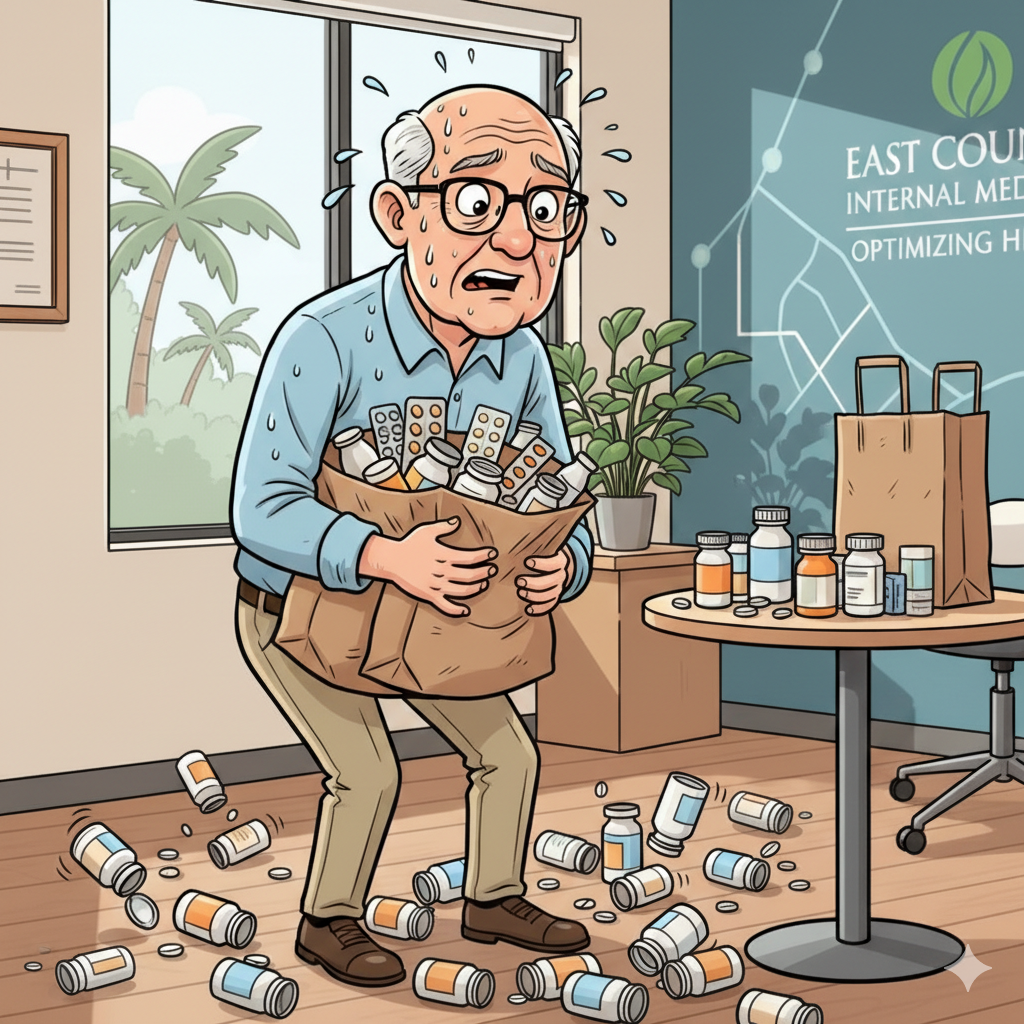
At East County Internal Medicine, we see many patients in Lakewood Ranch managing five, ten, or even fifteen medications at once. This is a clinical scenario known as polypharmacy, and while each drug may have been prescribed with good intentions, the combination can sometimes do more harm than good.
The Risks of Polypharmacy in the Elderly
The way our bodies process medication changes as we get older. Our kidneys and liver may not clear drugs as quickly, and our sensitivity to side effects often increases. When too many medications interact, the risks include:
- Increased Fall Risk: Many medications cause dizziness or sedation, which are leading causes of hip fractures and head injuries in seniors.
- Cognitive Confusion: What looks like early dementia or "brain fog" is sometimes simply a side effect of a specific drug combination.
- Drug-Drug Interactions: One medication might cancel out the benefit of another or, worse, create a dangerous new side effect.
- Prescribing Cascades: This happens when a doctor prescribes a new medication to treat the side effect of an existing medication, leading to an endless cycle of more pills.
What is Deprescribing?
The "traditional" medical mindset is often about adding treatments. However, a vital new trend in geriatric and internal medicine is deprescribing.
Deprescribing is the supervised process of reducing or stopping medications that may no longer be beneficial or may be causing unnecessary harm. It isn’t about "giving up" on treatment; its about optimizing quality of life.
Why Deprescribing is "The Harder Trend"
If adding a pill is easy, taking one away is surprisingly difficult. It requires:
- Close Monitoring: We cant just stop a medication "cold turkey." It requires a careful "tapering" process to ensure your body adjusts safely.
- Clinical Courage: It takes time and expertise to look at a patients entire history and decide which "maintenance" drug from ten years ago is no longer serving them today.
- Patient Trust: We understand that many patients feel "protected" by their medications. Moving away from a long-term prescription requires a strong doctor-patient relationship.
How We Can Help
At East County Internal Medicine, Shaan Kunwar, DO, prioritizes medication reconciliation at every visit. Our goal is to ensure that every pill you take has a clear, evidence-based purpose that outweighs its risks.
The First Step: Bring a "brown bag" of all your current medicationsincluding over-the-counter supplementsto your next appointment. Together, we can review your list and determine if you are a candidate for a "medication spring cleaning."
Ready to simplify your health?
Schedule an appointment at East County Internal Medicine today.