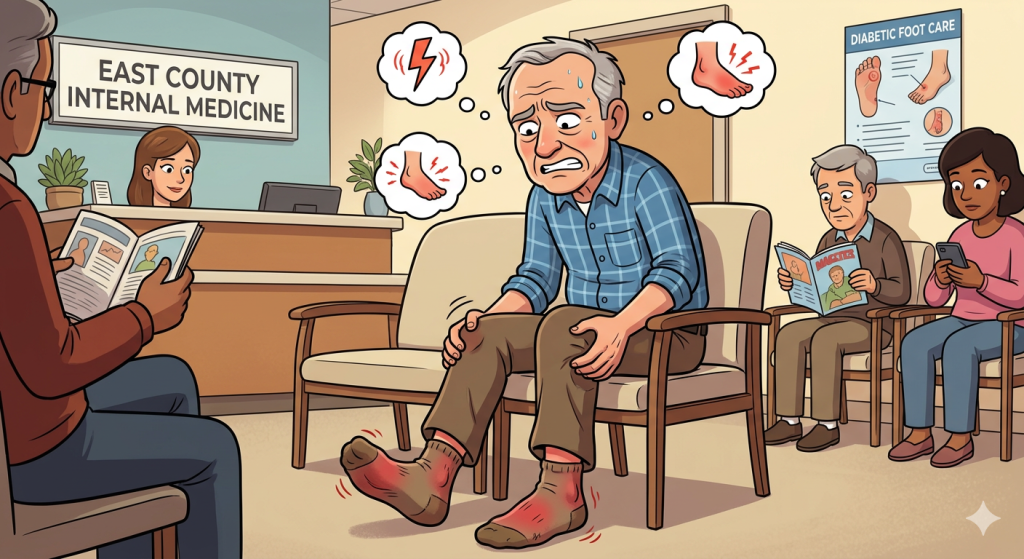
At East County Internal Medicine, we treat diabetes as a whole-body condition, but some of its most devastating effects happen where you might least expect: your feet. Diabetes is a “creeping” disorder that often progresses without pain, yet it is the leading cause of non-traumatic lower-limb amputations worldwide. When foot health is neglected, the transition from a minor blister to life-threatening sepsis can happen with alarming speed.
The Silent Erosion of Sensation and Circulation
The primary reason diabetes targets the feet is a “perfect storm” of nerve damage and poor blood flow. Peripheral neuropathy affects approximately 60% of people with diabetes, often beginning as a faint tingling before progressing to total numbness. Without the body’s natural “warning system” of pain, a patient might walk on a pebble or a small cut for days without realizing it.
Simultaneously, diabetes narrows the arteries, reducing the delivery of oxygen and nutrients needed for healing. This combination means that one-third of all individuals with diabetes will develop a foot ulcer in their lifetime.
From a Small Sore to a Life-Altering Crisis
Our office in Lakewood Ranch frequently sees the progression of these chronic issues from patients in surrounding Bradenton, Parrish, and Sarasota.
Diabetic Foot Ulcers: These are not just “sores.” Approximately 20% of moderate to severe foot ulcers result in some level of amputation.
Infection and Sepsis: Once an ulcer forms, it is highly susceptible to infection; in fact, 85% of diabetes-related amputations are preceded by a foot ulcer. If the infection reaches the bone (osteomyelitis) or enters the bloodstream, it can lead to sepsis, a life-threatening emergency with a mortality rate that can range from 15% to 30%.
Charcot Foot: This is a severe complication where bones in the foot fracture and the joints collapse because the patient cannot feel the injury. The risk of amputation is seven times higher for those with Charcot deformity compared to those with standard neuropathy alone.
The Severe Impact on Quality of Life
When you can no longer walk easily, every aspect of life changes. Patients with active ulcers or previous amputations report significantly lower quality of life, specifically in physical functioning and general vitality. The statistics on long-term outcomes are a sobering reminder of why early intervention is critical: the five-year mortality rate for an individual with a diabetic foot ulcer is 2.5 times higher than for those without one.
Our Commitment to Your Mobility
The good news is that between 50% and 80% of diabetic foot infections are preventable with proactive, multidisciplinary care. Most amputations can be avoided through regular screenings and immediate attention to even the smallest wounds.
If you have noticed any numbness, swelling, or slow-healing sores, do not wait for pain to develop—by then, it may be too late.
Book Your Diabetic Foot Exam Today at the East County Internal Medicine Patient Portal or call us at (941) 727-7771. We are here to help you keep your independence and stay on your feet.
“An informed patient is a healthier patient”
Shaan Kunwar DO
941-727-7771