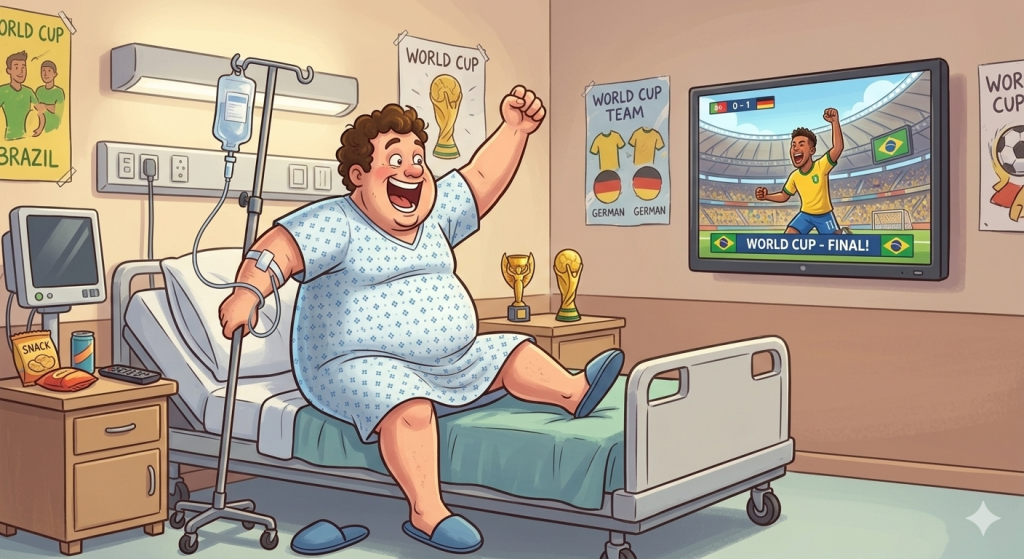
Every four years, billions of people around the globe tune in to watch the World Cup. For 90 minutes at a time, fans sit on the edge of their seats, gripping their armrests, cheering, and groaning in unison. While it looks like a passive activity from the outside, your body tells a completely different story.
As an internal medicine practice, we often talk about the health impacts of diet, exercise, and sleep. But major emotional events—like watching your favorite soccer team fight for survival on the world stage—can trigger a massive physical response. When you watch the World Cup, your body experiences a literal biochemical and hormonal rollercoaster.
The Chemistry of Victory and Defeat
Your endocrine system, which manages your body’s hormones, reacts to a soccer match based entirely on the scoreboard. Scientists refer to this as “vicarious victory” or “vicarious defeat.” Your brain cannot fully distinguish between you playing on the pitch and you watching the game from your couch.
When your team scores or wins a crucial match, your brain floods your system with dopamine, the “feel-good” chemical. Simultaneously, testosterone levels spike. This surge happens in both male and female fans, leading to feelings of high energy, confidence, and collective euphoria.
However, a devastating loss triggers the exact opposite reaction. Testosterone levels plummet, and the adrenal glands release a massive wave of cortisol, the primary stress hormone. Cortisol prepares your body for a “fight or flight” scenario. When you are sitting stationary on a couch, that extra cortisol has nowhere to go. It lingers in your system, which can leave you feeling physically exhausted, irritable, and emotionally drained for hours—or even days—after the final whistle.
The Cortisol Danger Zone
While a temporary stress spike is normal, the intense cortisol release during a high-stakes tournament can pose genuine health risks, particularly for dedicated superfans. Researchers at the University of Oxford studied fans during a previous World Cup tournament. They discovered that highly devoted fans experienced such extreme, prolonged cortisol spikes during a loss that it put them at risk for chronic stress complications, including elevated blood pressure and compromised immune function.
For patients who already manage underlying health conditions, this hormonal surge is more than just an emotional nuisance. Chronic cortisol elevation can disrupt sleep patterns, alter blood sugar regulation, and increase systemic inflammation.
The Cardiovascular Strain
The most dramatic link between soccer and health is its impact on the heart. During critical matches, the risk of a cardiovascular emergency can change significantly for passionate fans.
The intense stress of a penalty shootout triggers a massive surge of adrenaline. This causes blood vessels to constrict, blood pressure to spike, and the heart rate to race. A famous study published in The New England Journal of Medicine looked at fans during the 2006 World Cup in Germany. Researchers found that on days when the German national team played, cardiovascular emergencies in the host region more than doubled for men and nearly doubled for women.
Whole-Body Health on Match Day
As a DO, my goal is to help patients understand how the mind and body connect. The emotional stress of the game often triggers a chain reaction of poor physical habits. During a match, fans are highly likely to consume ultra-processed foods, high-sodium snacks, and alcohol.
When you mix high cortisol and adrenaline with a sudden influx of alcohol and fried foods, you create a temporary metabolic gridlock. Your blood pressure rises, your liver works overtime to process the alcohol, and your digestion slows down due to the stress response.
How to Protect Your Health This Tournament
You do not have to skip the tournament to protect your health. Instead, you can use a few simple strategies to keep your hormones and stress levels in check:
- Move During Halftime: When your body is pumping out adrenaline and cortisol, it wants to move. Use the 15-minute halftime break to stretch, walk around the block, or do a few light exercises to burn off the stress hormones naturally.
- Hydrate Strategically: Match-day environments make it easy to overconsume alcohol or sugary sodas. Match every alcoholic or caffeinated drink with a full glass of water to keep your blood pressure stable and support your kidneys.
- Practice Intentional Breathing: If the game goes into extra time or a tense penalty shootout, take three slow, deep belly breaths. Deep breathing activates the parasympathetic nervous system, acting as a natural brake against a runaway adrenaline spike.
Fandom is a beautiful way to connect with community, share passion, and experience collective joy. By staying mindful of how the game impacts your physical body, you can safely enjoy every goal, save, and victory.
Like the blog? Sign up for the Newsletter!

About the Author
Dr. Kunwar is an independent primary care physician practicing in Lakewood Ranch area since 2017. He trains medical students and residents and has a background in regulating Fraud, Waste and Abuse.