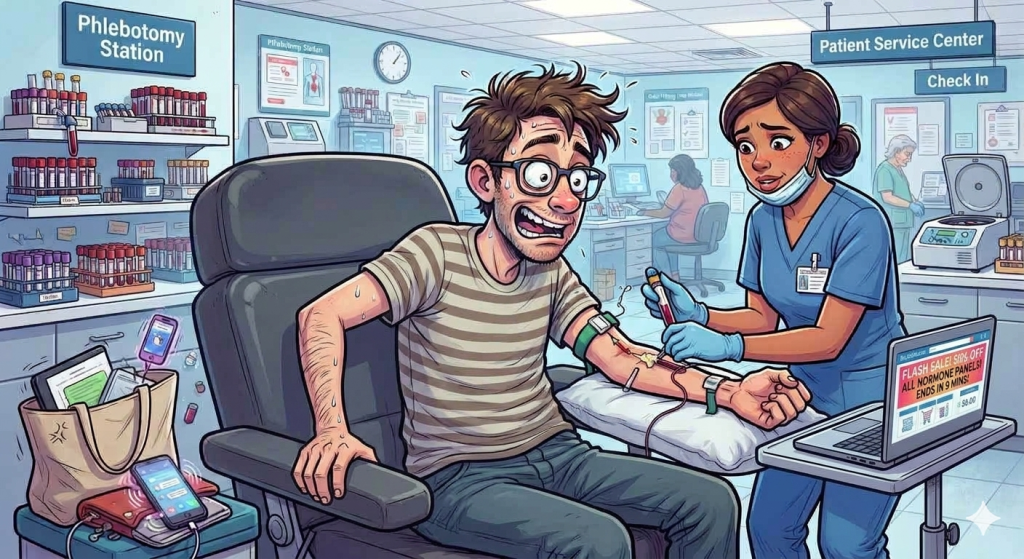
Imagine sitting on your couch, scrolling through your phone, and adding a “Comprehensive Metabolic Panel” or a “Male Fertility Hormone Bundle” to a digital shopping cart. You apply a 15% discount code, check out with Apple Pay, and book an appointment at a local retail plaza.
This isn’t a scene from a sci-fi novel about futuristic medicine. It is the current reality of the multi-billion-dollar laboratory testing market.
Over the last decade, medical testing has undergone a radical transformation. What used to be a highly guarded clinical diagnostic tool—requiring a doctor’s visit, a physical paper requisition form, and a clear medical justification—has been successfully commoditized into a retail product.
Today, getting your blood drawn feels less like traditional healthcare and more like direct-to-consumer e-commerce. And that is because, behind the scenes, it is.
The Invisible Middlemen: How the Lab Market Operates
To understand how this market bypassed the traditional doctor’s office, you have to look at the business infrastructure that powers it. The modern direct-to-consumer (DTC) lab industry relies on a clever network of digital health platforms, wholesale buyers, and physician networks.
When you buy a test online, a few things happen behind the scenes:
- The Ghost Physician Network: Legally, a licensed medical professional still must order a laboratory test. To get around this, DTC platforms partner with independent “physician networks.” A doctor you will never see or speak to digitally signs off on your order in seconds, purely to satisfy regulatory checkboxes.
- The Corporate Giants Move In: Recognizing a massive revenue stream, legacy lab giants like Quest Diagnostics and Labcorp launched their own consumer-facing storefronts (Quest Health and Labcorp OnDemand). Instead of just processing tests for hospitals, they now market directly to the public.
- The Wholesale Markup: The margins in this industry are staggering. A lab test billed to insurance might theoretically cost $400. A cash-paying retail customer might buy it online for $90. Meanwhile, the wholesale digital platform might only pay the processing lab $15 to run the sample. The leftover amount isn’t a medical fee; it’s an e-commerce profit margin.
Redefining Patients as Customers
Because this space behaves like a retail market, it uses retail tactics. Traditional healthcare relies on epidemiological data and clinical guidelines to determine who needs a test. The retail lab market relies on algorithms, social media advertising, and impulse buys.
Scroll through Instagram or TikTok and you will see lifestyle influencers promoting home finger-prick kits to “unlock the secrets of your metabolism” or “fix your gut health.”
Platforms use classic e-commerce playbook maneuvers:
- Bundle and Save: Buy a thyroid panel, and the checkout page will suggest adding a Vitamin D test for just $29 more to increase the platform’s average order value.
- Holiday Sales: “New Year, New You” promotions offering sitewide discounts on cardiovascular profiles.
- The Illusion of Autonomy: The marketing heavily relies on the rhetoric of “taking control of your health” and “democratizing data.” However, it often drives consumers to buy expensive test panels they do not clinically need, manufactured by marketing teams rather than medical necessity.
The Clinical Fallout: Data Without Context
What happens when you treat diagnostic testing like a supermarket? You get a massive influx of raw data with absolutely no clinical context.
When a traditional doctor orders lab work, they do it based on your symptoms, physical exam, and medical history. They already know what they are looking for and how they will react to the results.
When a consumer buys a 50-biomarker “wellness overview” online, they receive a multi-page PDF report days later. Because of natural biological fluctuations and the statistical nature of lab reference ranges, almost everyone will have at least one or two biomarkers flag as “high” or “low.”
This leads to a cascade of predictable problems:
- The Panic Cycle: A slightly elevated liver enzyme or an out-of-range cortisol level sends a patient into a Google rabbit hole, triggering intense health anxiety over a variance that is likely clinically meaningless.
- Shifting the Burden: The retail lab platform happily collects the cash, delivers the PDF, and washes its hands of the consumer. When the user panics over their results, they schedule an emergency appointment with their actual primary care doctor.
- System Strain: The traditional primary care system—already facing severe clinician shortages—is forced to absorb the unpaid labor of sitting down with a patient to painstakingly deconstruct and disprove the relevance of a self-ordered, commercially driven lab report.
The Double-Edged Sword of Consumer Autonomy
None of this is to say that direct access to laboratory testing is inherently evil. For millions of people, the commercial lab market solves real, systemic issues in traditional healthcare.
If you are uninsured, underinsured, or have a high-deductible health plan, buying a cash-pay lab test online is often hundreds of dollars cheaper than going through a hospital system. For individuals managing known, chronic conditions like diabetes or hypothyroidism, being able to track baseline metrics affordably and conveniently without paying for a specialist visit every few months is a genuine blessing.
But we must be honest about what this shift represents.
A laboratory report is not healthcare; it is data. Healthcare requires context, a deep understanding of human physiology, clinical nuance, and a trusted human relationship. When we click “add to cart” on our health diagnostics, we aren’t just buying convenience—we are participating in a massive commercial marketplace that prioritizes transaction volume over patient well-being.
Like the blog? Sign up for the Newsletter!

About the Author
Dr. Kunwar is an independent primary care physician practicing in Lakewood Ranch area since 2017. He trains medical students and residents and has a background in regulating Fraud, Waste and Abuse.