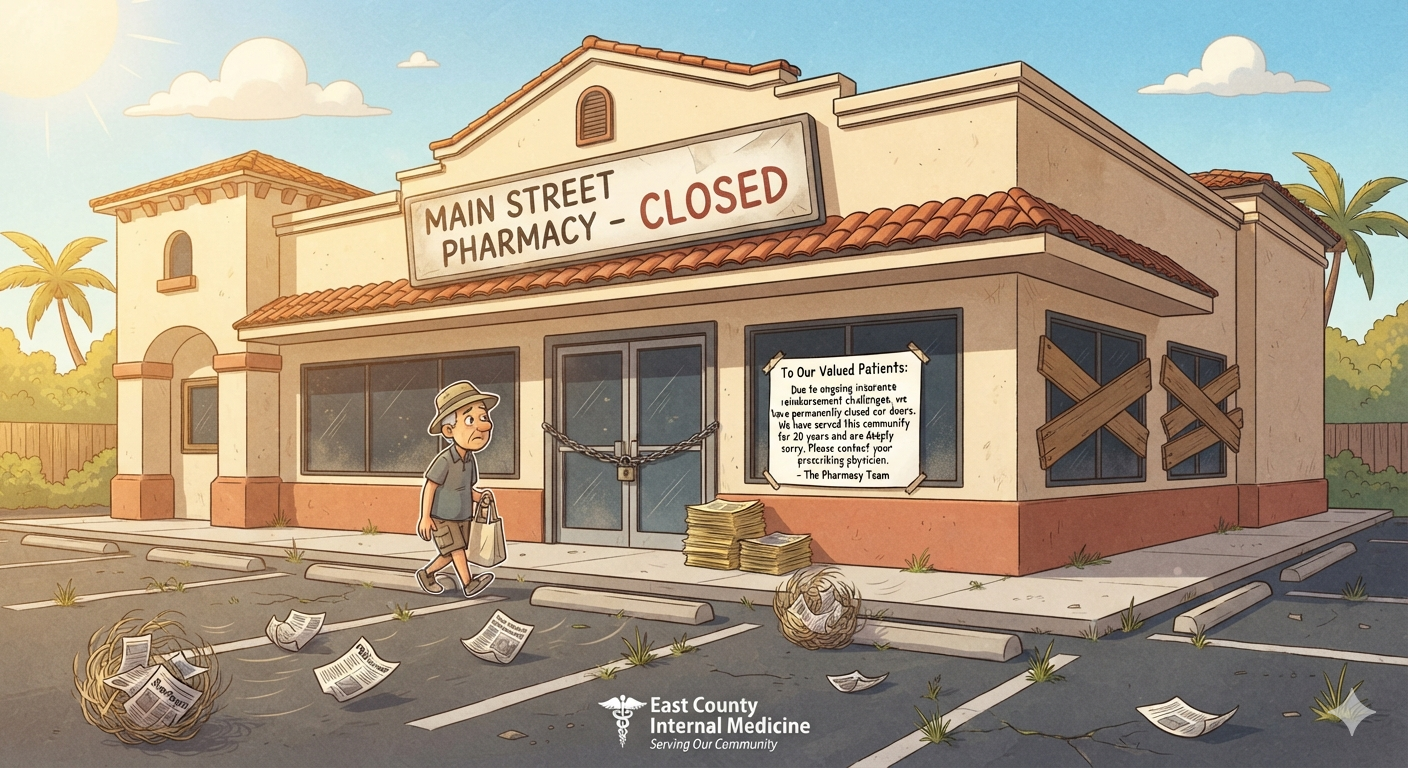
Have you noticed longer lines at our local Lakewood Ranch and Bradenton pharmacies lately? Perhaps your neighborhood pharmacy suddenly closed, or you were told a common medication like Ozempic or Mounjaro was out of stock.
While it is easy to blame understaffing, a hidden financial crisis is quietly reshaping how our community gets medical care. It is called negative reimbursement, and it is changing the future of healthcare.
As an independent medical practice, East County Internal Medicine believes in total transparency. Here is what is happening behind the pharmacy counter and what it means for your family.
What is “Negative Reimbursement”?
Most neighbors assume that when a pharmacy sells a medication, they make a small profit. Today, the opposite is frequently true.
Large corporate middlemen, known as Pharmacy Benefit Managers (PBMs), dictate the pricing for prescription insurance plans. In many cases, these middlemen legally reimburse pharmacies less than the actual wholesale cost of the drug.
- The Loss: A local pharmacy might buy a life-saving medication from a wholesaler for $100. After filling it for an insured patient, the middleman might only reimburse the pharmacy $90.
- The GLP-1 Squeeze: This problem has skyrocketed with popular brand-name weight loss and diabetes medications. Because these drugs are so expensive to stock, pharmacies lose significant amounts of money on every single refill.
How This Affects Our Suncoast Community
Pharmacies cannot operate at a loss forever. To survive, both independent local pharmacies and major retail chains are being forced to make drastic changes:
- Pharmacy Deserts: Neighborhood pharmacies are closing their doors permanently, forcing patients to drive further and wait in longer lines.
- Stock-Outs: Some pharmacies are making the difficult choice to stop stocking certain high-cost medications because filling them would ruin the business financially.
- The Workforce Strain: Future pharmacists in training are shifting away from community drugstores, leading to a shortage of the trusted local pharmacists we rely on for advice.
What You Can Do to Protect Yourself
You do not have to be a helpless bystander to these insurance shifts. Here are three practical steps to ensure you always get your medicine:
- Plan Ahead for Refills: Do not wait until your last pill to request a refill, especially for brand-name or highly popular medications. Give your pharmacy 5 to 7 days of lead time.
- Explore Alternative Models: Look into transparent, consumer-direct options like Mark Cuban’s Cost Plus Drug Company or local transparent-pricing pharmacies. Sometimes, paying a flat cash rate bypasses insurance hurdles entirely and costs less than your standard copay.
- Talk to Your Doctor: If your pharmacy cannot source your medication, let us know. We can look for clinically identical alternatives that might be more readily available in our area.
Healthcare Designed for People, Not Middlemen
At East County Internal Medicine, Dr. Shaan Kunwar, DO, chose a direct-care model precisely to avoid this kind of corporate complexity. We operate on flat-rate, transparent pricing ($175 for new patients, $125 for follow-ups) so that your care is decided by you and your doctor—not an insurance algorithm.
We are proud to stand with our local independent pharmacy partners and our patients as we navigate these changes together.
👉 Need a healthcare partner who looks out for you? Skip the corporate confusion. Visit eastcountyim.com to book an appointment, or visit our clinic at 11009 Gatewood Drive, Suite 104 in Lakewood Ranch.
Like the blog? Sign up for the Newsletter!

About the Author
Dr. Kunwar is an independent primary care physician practicing in Lakewood Ranch area since 2017. He trains medical students and residents and has a background in regulating Fraud, Waste and Abuse.