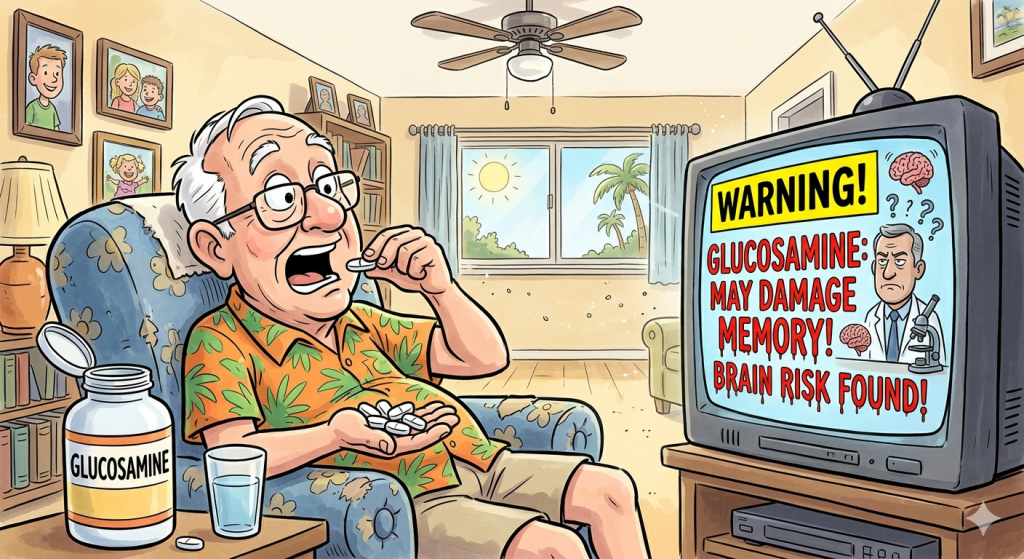
For years, millions of older adults have reached for over-the-counter glucosamine supplements to ease knee and hip stiffness. Because it is widely available without a prescription, it is easy to assume that it carries zero risk.
However, a groundbreaking new medical study has turned that assumption upside down, revealing a hidden risk to brain health. This critical update reminds us that even long-trusted supplements can hold unexpected dangers.
The New Clinical Data on Glucosamine
The recent warning stems from a landmark study published by University of Florida Health researchers in the journal Nature Metabolism. By utilizing advanced artificial intelligence to analyze 12 years of electronic health records across more than 60,000 patients, researchers uncovered a deeply concerning link between glucosamine and accelerated cognitive decline.
The study revealed two major findings for vulnerable populations:
- Accelerated Alzheimer’s Risk: Patients already experiencing Mild Cognitive Impairment (MCI) who regularly took glucosamine faced a 25% higher risk of progressing to full-blown Alzheimer’s disease.
- Increased Dementia Mortality: For individuals already diagnosed with dementia, regular glucosamine use was associated with a 25% higher mortality risk within five years.
Why Does a Joint Pill Affect Your Memory?
To understand why a supplement meant for your knees can impact your brain, we have to look at the biology.
Glucosamine is an amino sugar. When you swallow it, it travels through your bloodstream and easily crosses the blood-brain barrier. In a perfectly healthy brain, this does not appear to cause issues.
However, in an aging brain that is already showing early signs of cognitive fragility, glucosamine acts like fuel on a hidden fire. It triggers a hyperactive process called hyperglycosylation—essentially placing abnormal “sugar tags” on critical brain proteins. This abnormal tagging causes the proteins to malfunction, accelerating neurodegeneration and worsening memory loss.
The Demographics Dilemma
This discovery presents a unique challenge for our community. The demographic of adults over the age of 65 is the exact population most likely to take glucosamine for osteoarthritis and joint health. Coincidentally, this is also the exact population at the highest statistical risk for developing early-stage cognitive changes.
What makes this a critical cautionary tale is that many patients take glucosamine “just in case,” despite years of clinical clinical trials showing that its actual ability to rebuild joint cartilage or provide significant pain relief is historically weak and inconclusive. In medical terms, the potential risk of this supplement may now heavily outweigh its proven rewards.
Actionable Advice for Our Patients
If you or a loved one are currently taking a glucosamine supplement, there is no need to panic. The study specifically noted that the accelerated decline occurred in brains already experiencing early cognitive changes, rather than healthy, younger brains.
However, this news is an important reminder to review what we put into our bodies. We advise taking the following steps:
- Evaluate the True Benefit: Ask yourself honestly if the supplement is actually reducing your joint pain. If you aren’t sure, or if you are taking it purely as a preventive measure, it may be time to stop.
- Consider Safer Alternatives: If you need joint relief, guide your focus toward lifestyle modifications like low-impact exercise and physical therapy, or discuss alternative anti-inflammatory options with us that do not cross the blood-brain barrier.
- Bring Your Bottle to Your Next Visit: Bring your complete list of vitamins and supplements to your next appointment at East County Internal Medicine.
Our goal is always to treat the whole person. We want to ensure that the choices you make to protect your joints today do not inadvertently compromise your cognitive health and memory tomorrow.
Have questions about your current supplement regimen? Schedule an appointment with us at eastcountyim.com to review your medications and build a safe, effective plan for healthy aging.
Like the blog? Sign up for the Newsletter!

About the Author
Dr. Kunwar is an independent primary care physician practicing in Lakewood Ranch area since 2017. He trains medical students and residents and has a background in regulating Fraud, Waste and Abuse.