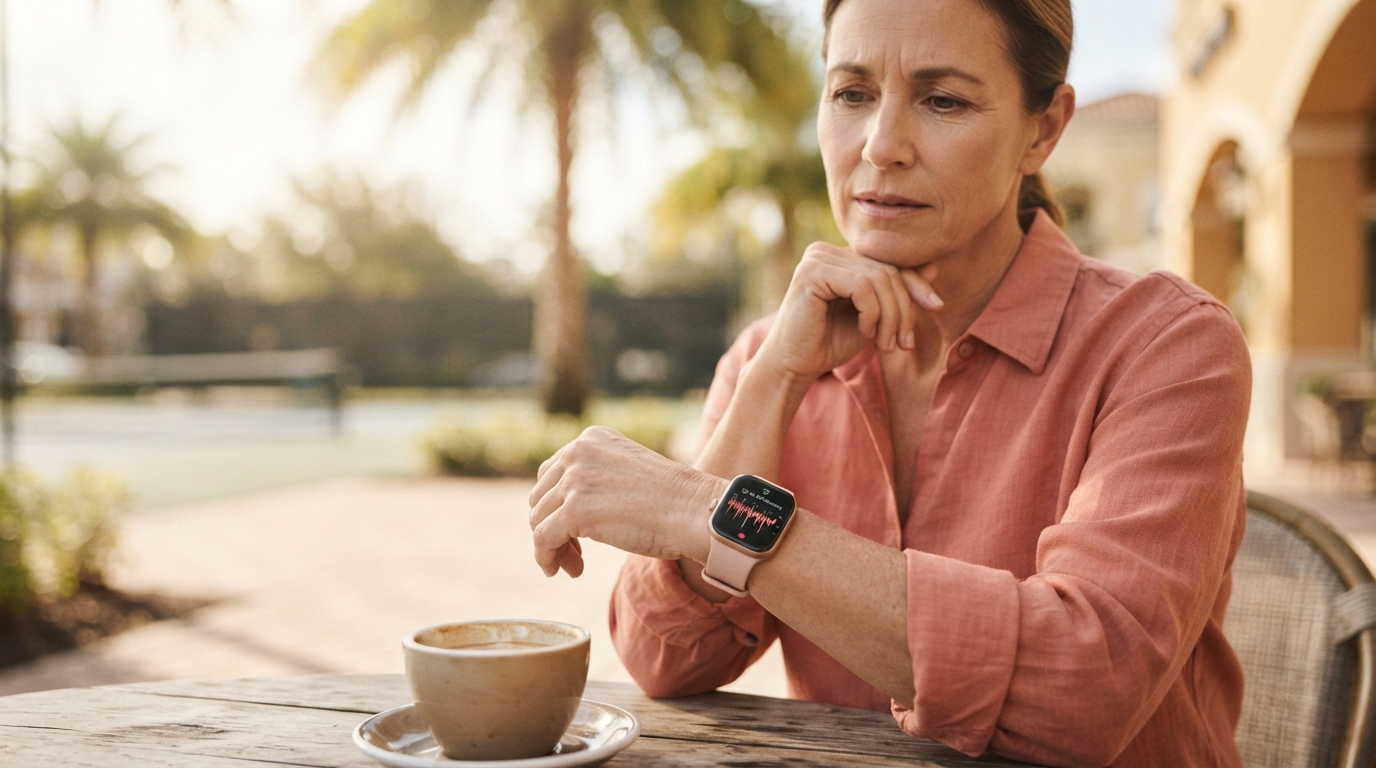
Walk into any coffee shop or pickleball court in Lakewood Ranch, and half the wrists in the room are quietly recording continuous heart rates, blood oxygen, sleep architecture, and single-lead ECGs. Twenty years ago, getting that kind of longitudinal data required an inpatient telemetry unit. Today, it sits under a watchband—and most people are feeding those charts straight into AI tools to figure out what it all means.
As an internist, I love it.
Some doctors still roll their eyes when a patient walks in with an Apple Watch printout or an AI summary of their trends. I actively encourage it. When patients track their own numbers and use modern tools to ask sharper questions, they are taking genuine ownership of their health. That is the future of medicine, and fighting it is pointless.
The problem isn’t the technology. The problem is that consumer wearables are phenomenal at collecting data and terrible at knowing when to keep quiet.
Signal vs. Algorithmic Noise
Your watch doesn’t know you. It knows math. When you feed raw biometric spikes into an algorithm without clinical context, normal human physiology starts looking like an emergency.
Here is how I separate what actually matters from expensive anxiety:
• Single-Night Sleep Scores Are Mostly Noise: Consumer devices estimate sleep stages using movement and heart rate variability—they aren’t measuring brainwaves. One “58” readiness score after a late dinner or a restless night doesn’t mean your nervous system is failing. What matters is a sustained multi-week shift alongside daytime fatigue or snoring.
• HRV (Heart Rate Variability) Is a Trend Line, Not a Grade: Seeing your HRV drop for two days because you played three hours of tennis in the Florida sun—or had two glasses of wine—is your body doing exactly what it’s supposed to do. Chasing a daily green ring turns recovery into another source of stress.
• Irregular Rhythm Alerts & Resting Heart Rate Creep: These are the signals worth paying attention to.
A pattern of irregular rhythm notifications, or a resting heart rate that quietly climbs 10 to 15 beats per minute over several weeks without an obvious trigger, gives us real clinical footing to investigate early.
How to Use Your Tech (and AI) Without Losing Your Mind
If you wear a tracker and use AI to analyze your health trends, keep doing it—just change how you filter the output:
1. Zoom out to 30- and 90-day baselines. Ignore single-day outliers unless you actually feel symptomatic (lightheaded, short of breath, chest pressure, or palpitations).
2. Use AI to organize, not diagnose. Running your symptom timeline and wearable trends through AI before a visit is a great way to spot patterns and prepare sharper questions. Just remember that an algorithm can’t see your medication list, your baseline labs, or examine you in person.
3. Treat the watch as a smoke detector, not the fire department. Its job is to flag a pattern worth looking at—not to deliver a verdict at 11:00 PM on a Sunday.
Technology works best when it pairs sharp, informed patients with a physician who actually has the time to connect the dots. Bring your watch data. Bring your questions. Just don’t let a wrist sensor ruin a perfectly good weekend.
About the Author
Shaan Kunwar, DO practices solo, independent internal medicine at East County Internal Medicine in Lakewood Ranch (34211). Focused on adult preventive care, chronic condition management, and cutting through health noise, he welcomes patients who bring their wearable data, lab questions, and curiosity to the exam room.
Visit or Contact: 11009 Gatewood Drive, Suite 104, Bradenton, FL 34211 • (941) 727-7771 • eastcountyim.com